Authors
- Silvia Mantilla
When a child close to us goes through a complex moment that overwhelms them emotionally, it is as if the sky suddenly darkens and a violent storm falls over them. No one is prepared, no one has an umbrella open to keep them from getting soaked, nor a shelter to bring them calm. The sound of thunder is distressing, the strong wind is frightening, and the rain seems endless. As adults, we often watch from the window without knowing how to act or what to say, wishing that “after the storm, calm will come,” or that it will pass quickly, because we do not know how to protect this child, since controlling the weather is impossible.
What we are not clear about is that trauma or a traumatic event does not go away with an open umbrella or by trying to make it pass faster. The storm does not leave just because we wish it would. What the child needs from us is not for us to tell them to “stop being afraid,” but for us to hold them while the thunder roars; for them to feel that while outside the wind is strong and the weather is cold, at home there will always be a warm and constant refuge ready to accompany them.
Sometimes, guided by the fear of seeing them suffer, we as adults want to explain why it rains or convince them that “tomorrow will be another day.” However, for them, in their mind and their heart, the storm is still a reality. At that moment, what matters most is not the explanation but PRESENCE: staying by their side, accompanying them and listening to their silence, allowing them to show their true emotions without correcting or reproaching them, without filling the space with hurried words. Our help as adults is not about having all the answers, but about showing this child that they are not alone in the middle of fear.
Over time, the clouds begin to shift; although the sky remains a bit gray, it also lets some rays of light through; other times it rains again without warning, and that is okay too. Let us remember that trauma does not disappear from one day to the next; it slowly transforms, little by little, like the landscape after a storm. This happens when the child learns to talk about what happened and understands that this painful experience does not define them at all. For this to happen, they need parents or caregivers who are not afraid of gray clouds, who do not run away when strong winds blow or close the doors during storms; they need parents who know how to stay and parents who know how to accompany them without haste.
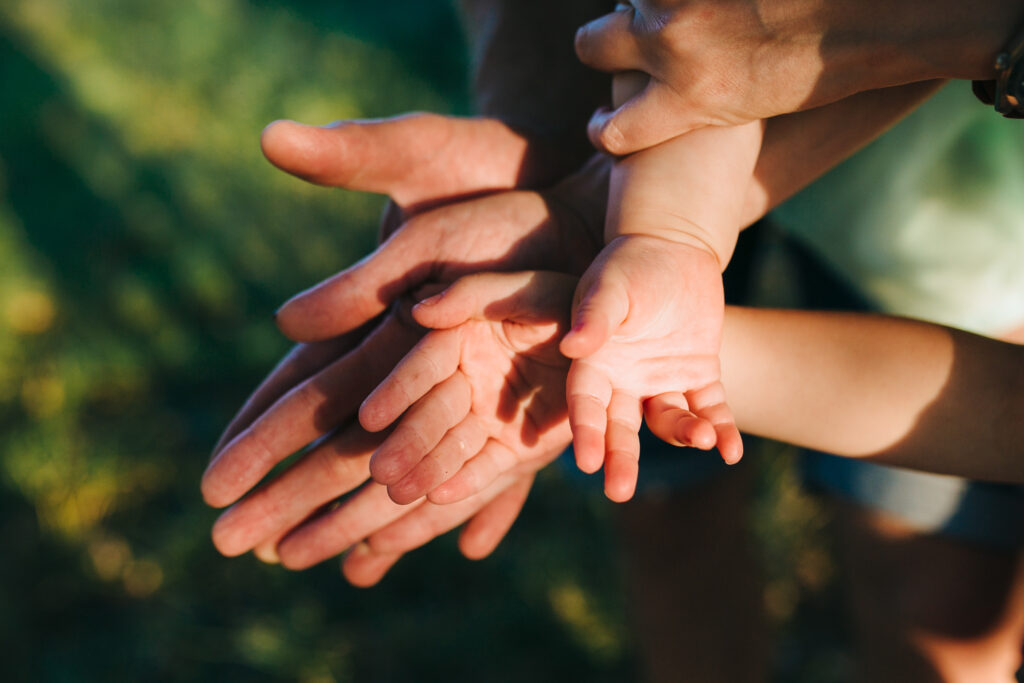
To accompany a child or a person with trauma is to become a refuge, that warm place where they can rest, be themselves, feel comfortable, cry, and feel safe again. It is not about making them forget the storm, but about teaching them that even though it may have rained heavily, life continues to have sun, flowers, and new paths to walk. Because after every storm, what a child remembers most is not the thunder, but who was with them when it began to rain.